Fleur de Sel vs Sea Salt vs Celtic Salt: What's the Difference?
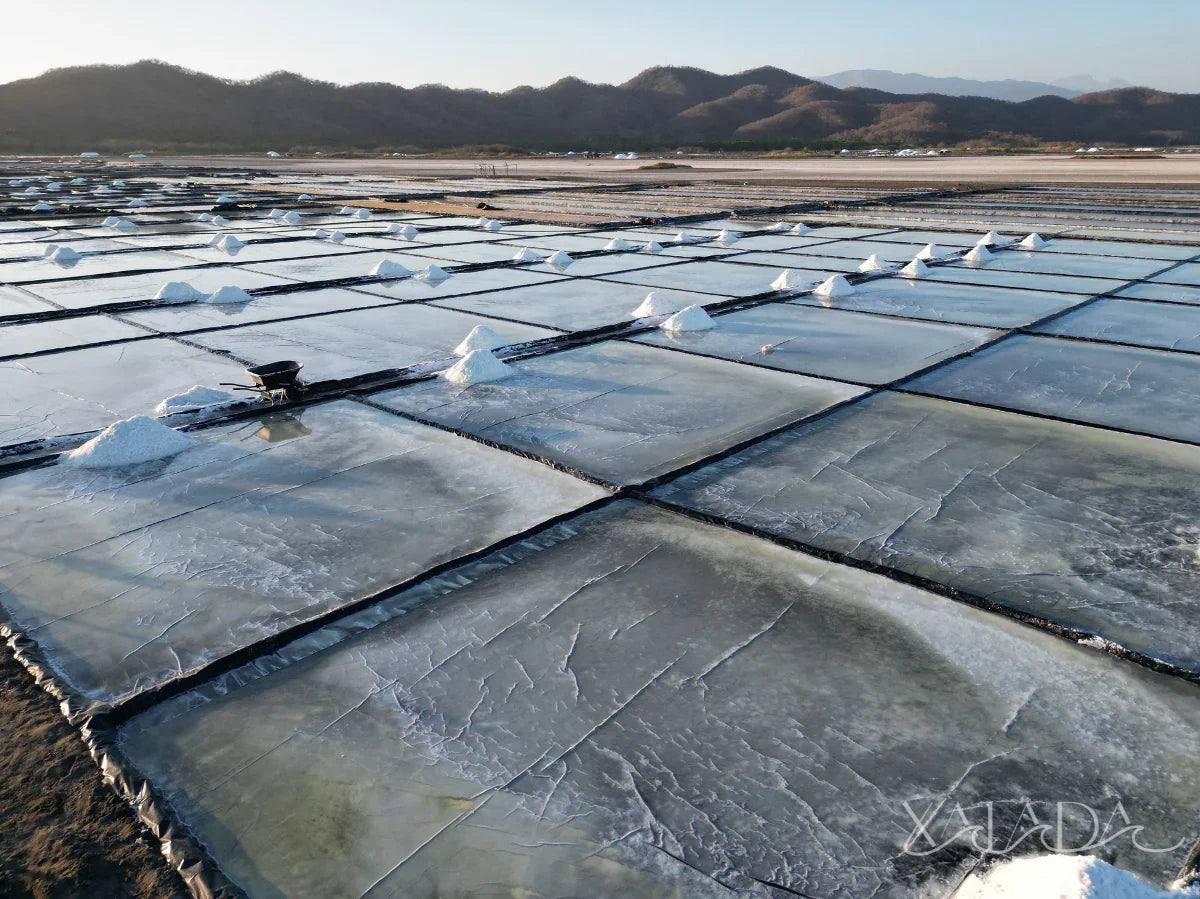
Also known as “Flower of Salt” or “Flor de Sal,” Fleur de Sel is one of the most prized forms of natural sea salt in the world. Harvested by hand from shallow salt ponds under precise weather conditions, it forms as a delicate, thin crust on the surface of evaporating seawater.
How Fleur de Sel Is Harvested
Unlike industrially refined table salt, Fleur de Sel is produced only when sun, wind, and humidity align perfectly. At traditional salt marshes like those in Guérande, France, each pond yields only 1 kilogram (2.2 lbs) of Fleur de Sel per day — a testament to its rarity and craftsmanship.
Here’s how it’s made:
-
Fresh seawater is channeled into shallow clay ponds.
-
When the water warms to about 37°C under the sun, a thin crystalline film forms on the surface.
-
Skilled salt workers carefully hand-harvest the fragile crystals before they sink or dissolve.
-
Only about 5% of total sea salt becomes Fleur de Sel, making it one of the most exclusive salts in the world.
The result is a pure, unrefined, mineral-dense salt that embodies the ocean’s natural balance.
Fleur de Sel vs Celtic Sea Salt — Key Differences
While both Celtic Sea Salt and Fleur de Sel share roots in traditional French salt harvesting, their formation, texture, and flavor vary significantly.
|
Feature |
Fleur de Sel |
Celtic Sea Salt |
|
Harvesting Method |
Hand-harvested from the surface of salt ponds during calm, sunny weather |
Raked from the bottom of shallow basins after full evaporation |
|
Texture & Appearance |
Light, flaky, irregular crystals; white to pale gray |
Coarse, moist, often gray due to clay and mineral sediment |
|
Flavor Profile |
Delicate, slightly sweet, mineral-rich — ideal as a finishing salt |
Bold, earthy, robust; great for everyday cooking |
|
Mineral Content |
~84 trace minerals |
~80–90 trace minerals |
|
Culinary Use |
Finishing dishes — adds crunch and complexity |
Cooking, brining, and general seasoning |
What Is Fleur de Sel Used For?
Fleur de Sel’s natural 10% moisture content helps it melt slowly on food, releasing flavor gradually and enhancing texture. It’s best used as a finishing salt — sprinkled right before serving to preserve its unique crunch and mineral notes.
Culinary Ideas:
-
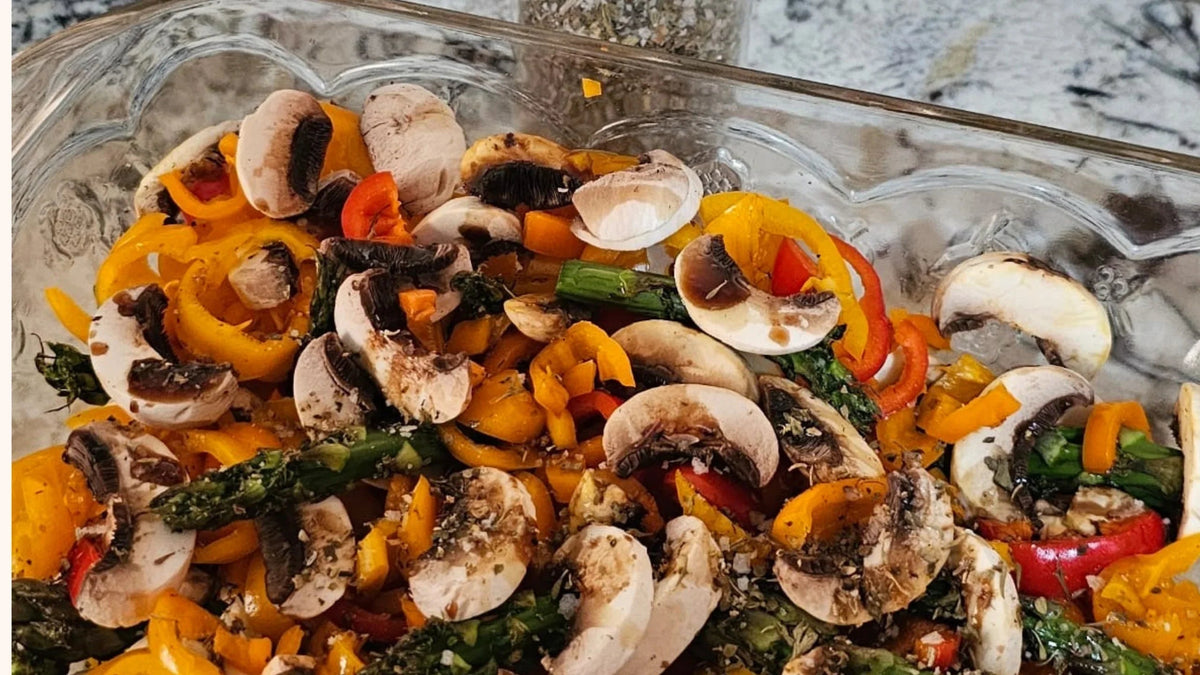
Sprinkle over grilled meats, seafood, or roasted vegetables.
-
Add a pinch to chocolate desserts or caramel for a sweet-salty balance.
-
Use as a topping for salads, eggs, or artisanal bread.
-
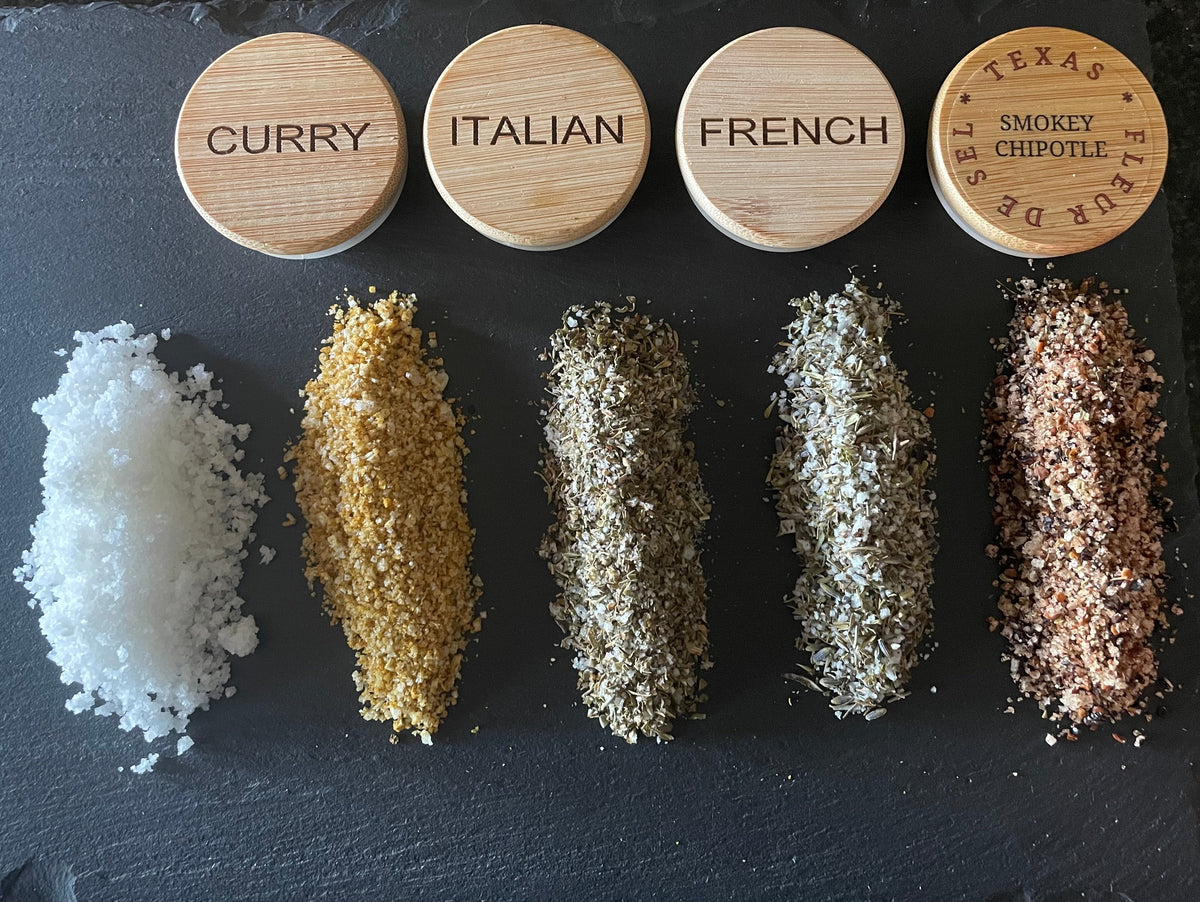
Blend with herbs to create custom gourmet seasoning blends like French, Italian, or Curry.
Pro Tip: Because of its moisture and structure, Fleur de Sel doesn’t dry out easily — you can store it uncovered in a ceramic bowl.
Nutritional and Wellness Benefits
Beyond its exquisite flavor, Fleur de Sel offers meaningful health benefits thanks to its mineral content:
-
Potassium – Regulates blood pressure and supports muscle function.
-
Copper – Aids in energy production and collagen formation.
-
Iron & Zinc – Boost immune health and cellular repair.
-
Fluoride – Promotes strong teeth and enamel protection.
-
Magnesium & Calcium – Support bone strength and electrolyte balance.
The result is a naturally mineralized salt that enriches your meals and supports everyday wellness — all while tasting exceptional.
Ocean-Root Fleur de Sel —
Shop the Collection: Explore Ocean-Root’s Fleur de Sel, French Blend, Italian Blend, and Curry Blend — all crafted to elevate your cooking with authentic, natural flavor.
Frequently Asked Questions
What is fleur de sel?
Fleur de sel, French for "flower of salt," is the thin layer of delicate crystals that forms on the surface of seawater as it evaporates in shallow salt ponds. It's skimmed off by hand, usually on warm, calm days, which makes it one of the most carefully harvested salts in the world.
Is fleur de sel the same as sea salt?
All fleur de sel is sea salt, but not all sea salt is fleur de sel. Most sea salt is gathered from the bottom of salt ponds or made by boiling seawater. Fleur de sel comes only from the top layer, so its crystals are finer, lighter and slightly moist, with a softer, cleaner taste.
Is fleur de sel the same as flaky sea salt?
No. Flaky sea salt is usually made by heating brine until thin, pyramid-shaped flakes form. Fleur de sel forms naturally in the sun and wind, so its crystals are small, irregular and a little damp. Both are finishing salts, but fleur de sel has a gentler crunch and melts more slowly on food.
What's the difference between fleur de sel and Celtic salt?
Celtic salt, also called grey salt or sel gris, is raked from the bottom of clay-lined salt ponds. That gives it its grey color, coarse texture and higher moisture, and it's often used for cooking. Fleur de sel is skimmed from the surface, so it's whiter and more delicate, and it's best sprinkled on just before serving.
Does fleur de sel have iodine?
Fleur de sel naturally contains only tiny traces of iodine, and our fleur de sel is not iodized. If you rely on salt for iodine in your diet, keep an iodized salt in your pantry as well.
Is fleur de sel healthier than table salt?
Gram for gram, fleur de sel has about the same sodium as other salts. The difference is in how you use it. Because its flavor is bright and its crystals sit on top of food, a small pinch at the end of cooking goes a long way, and many people find they reach for the salt shaker less.
How do you use fleur de sel?
Use it as a finishing salt. Sprinkle it on right before serving so the crystals stay crisp. Try it on steak, grilled fish, roasted vegetables, eggs, avocado toast, salads, caramel, chocolate chip cookies, or even fresh fruit like watermelon.
Can I cook with fleur de sel?
You can, but it would be a waste of its texture, since the crystals dissolve once they hit liquid or heat. Use regular salt for pasta water and sauces, and save fleur de sel for the finishing touch.
What do Ocean Root's fleur de sel blends taste like?
Each blend starts with hand-harvested fleur de sel mixed with herbs and spices. The French Blend adds herbs de Provence and lavender, the Italian Blend basil and oregano, the Curry Blend warm curry spices, and the Texas Smokey Chipotle Blend smoked chipotle and paprika. Shop all Fleur de Sel blends →

Written by Gabriela Munoz Castillo